
Nurse bullying adds fuel to an already high-stress environment. To move toward a healthier, more supportive workplace, it starts with looking inward and asking whether our own words or actions, intentional or not, could be contributing to the problem.
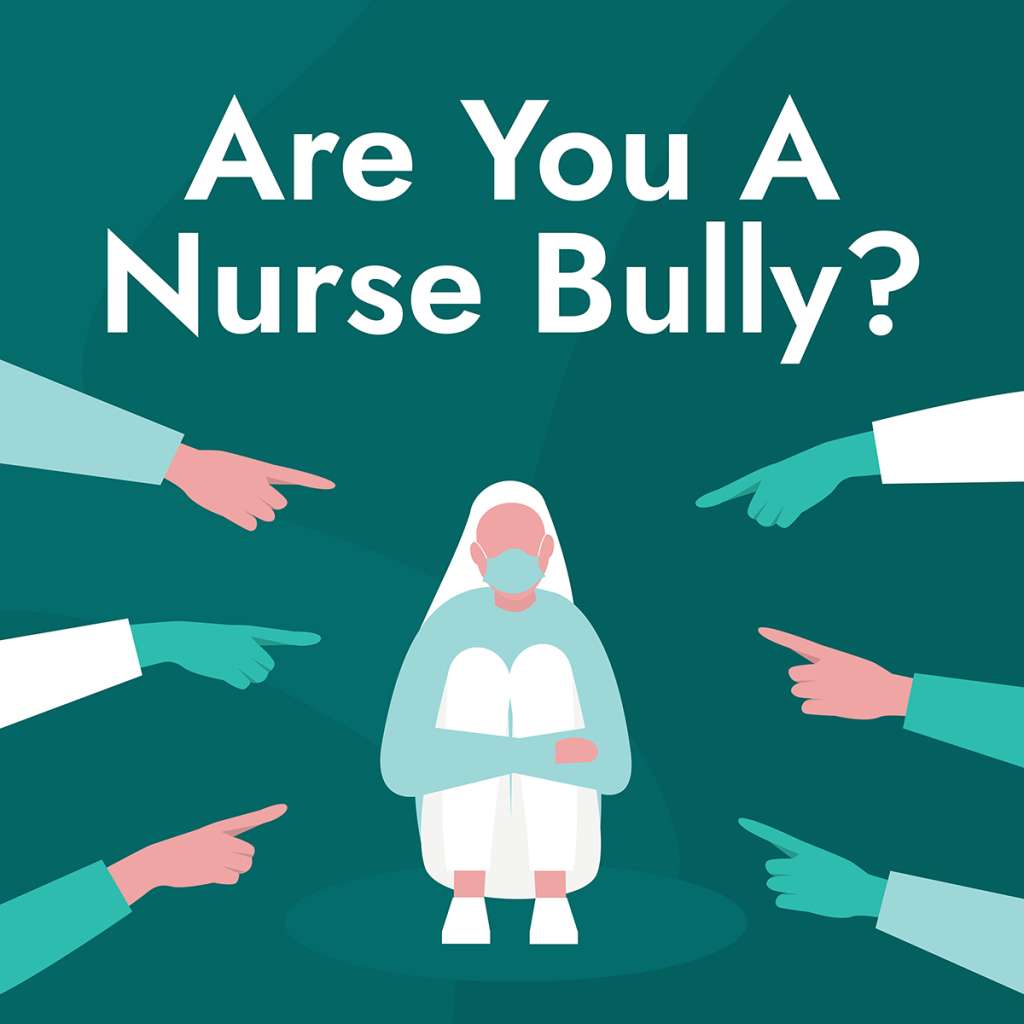
Nurse bullying, also known as lateral violence, is a form of workplace violence defined as non-physical, aggressive, hostile, and/or harmful behavior between coworkers. While individual acts of nurse bullying can appear relatively harmless, they create a toxic environment that takes a toll on employees' morale and can compromise patient care.
Recent research showed that the prevalence of lateral violence among nurses was between 6.8% and 82.6%. In fact, Nurse.com’s 2024 Nurse Salary and Work-Life Report found that 31% of nurses have experienced verbal abuse by a colleague, while 34% reported being subjected to intimidation.
“Lateral violence often hides in plain sight because it’s dismissed as personality differences or ‘just the way things are.’ But when disrespect becomes normalized, it erodes trust, teamwork, and ultimately patient safety,” said Cara Lunsford, RN, CPHON, Vice President of Clinical Solutions at Relias.
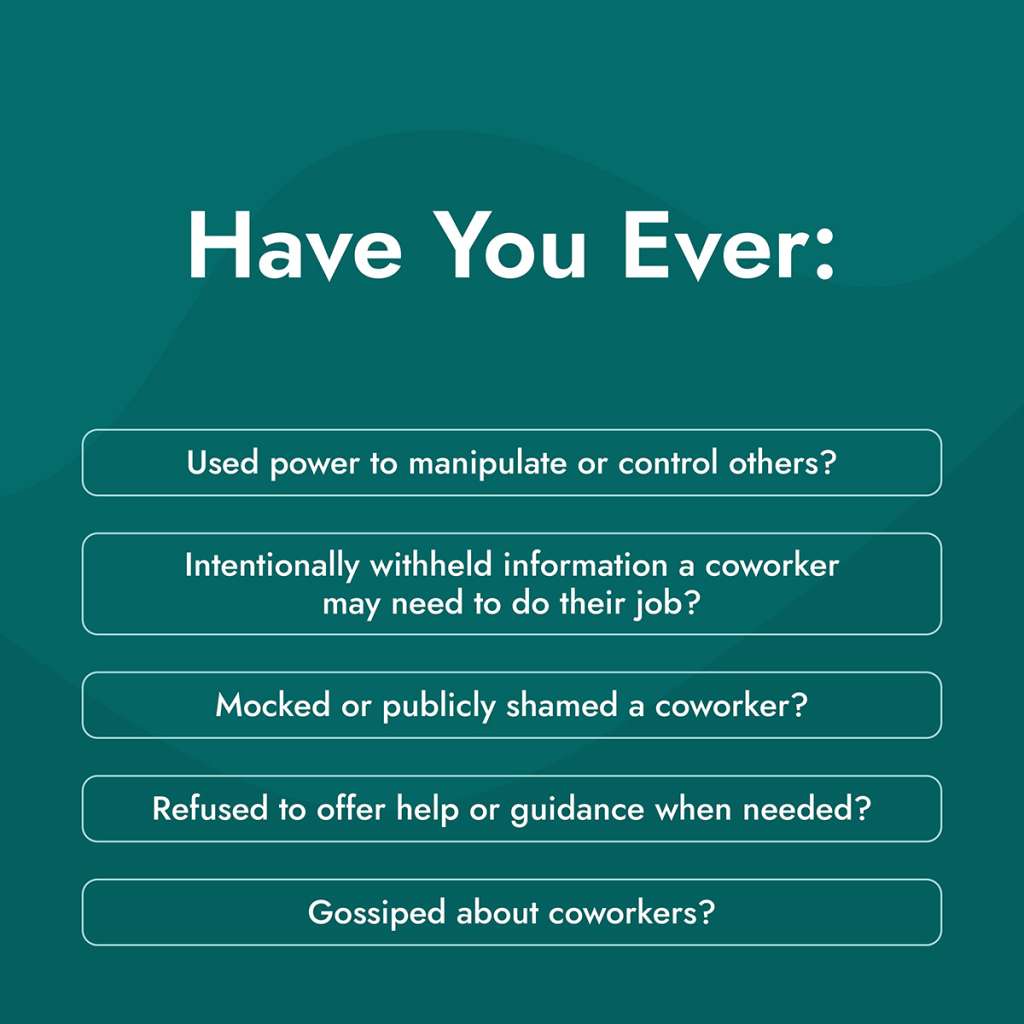
Bullying can take many forms, but certain behaviors may show up again and again. Pause for a moment and honestly ask yourself if you’ve ever:
- Used power to manipulate or control others?
- Intentionally withheld information that a coworker may need to do their job?
- Mocked, criticized, or publicly shamed a coworker?
- Intimidated a coworker through verbal threats of disciplinary action?
- Refused to offer help or guidance when needed?
- Issued unfair assignments or downplayed others' accomplishments?
- Yelled at a coworker?
- Refused to look at a coworker when speaking to them or rolled your eyes at them?
- Participated in gossip or negative talk about coworkers?
- Excluded coworkers or made sarcastic or belittling comments to them?
“Addressing nurse bullying requires honest self-reflection. Every nurse, regardless of title or tenure, has a responsibility to consider how their communication style, stress responses, and daily interactions impact the culture around them,” added Cara.
Why nurse bullying?
Amy Loughren, RN, as portrayed in the Netflix movie The Good Nurse, weighed in on the how bullying impacts nursing.
"Bullies cause stress and anxiety for the entire team and calling them out can also lead to retaliation in the form of passive-aggressive gossiping, attempts to form anti-colleague alliances, and ignoring calls for assistance," noted Amy.
"At best, this creates an environment of stress — at worst, it interrupts patient care potentially causing patient harm."

Amy discussed how a lack of self-reflection can lead to nurses unknowingly practicing bullying behavior throughout their careers.
"I have worked with nurses who are clearly a bully and yet they would be shocked if someone called them out on their bullying behavior," said Amy. "There seems to be a lack of self-insight as bullies tend to believe their intimidations are warranted rather than harmful and hurtful."
While there are differing opinions and theories as to why nurse bullying is so common, Amy believes it might be part of a defense mechanism and a dysfunctional way that nurses set boundaries.
"Perhaps saying no isn't comfortable for them so making themselves unapproachable pushes colleagues away and deters supervisors from asking anything of them," she shared.

If you're being bullied
If you witness bullying behaviors directed at yourself or others, take action:
- Immediately ask for help.
- Tell the perpetrator that their behavior is unacceptable. Silence can imply that the abuse is tolerated.
- Clearly communicate how you would like to be treated instead of assuming the perpetrator already knows.
- Carefully document every detail of the encounter.
- Offer support and assistance to the colleague being bullied.
- Follow the chain of command to register a complaint with a third-party organization, such as the Occupational Safety and Health Administration (OSHA), if your management doesn't take your feedback seriously.
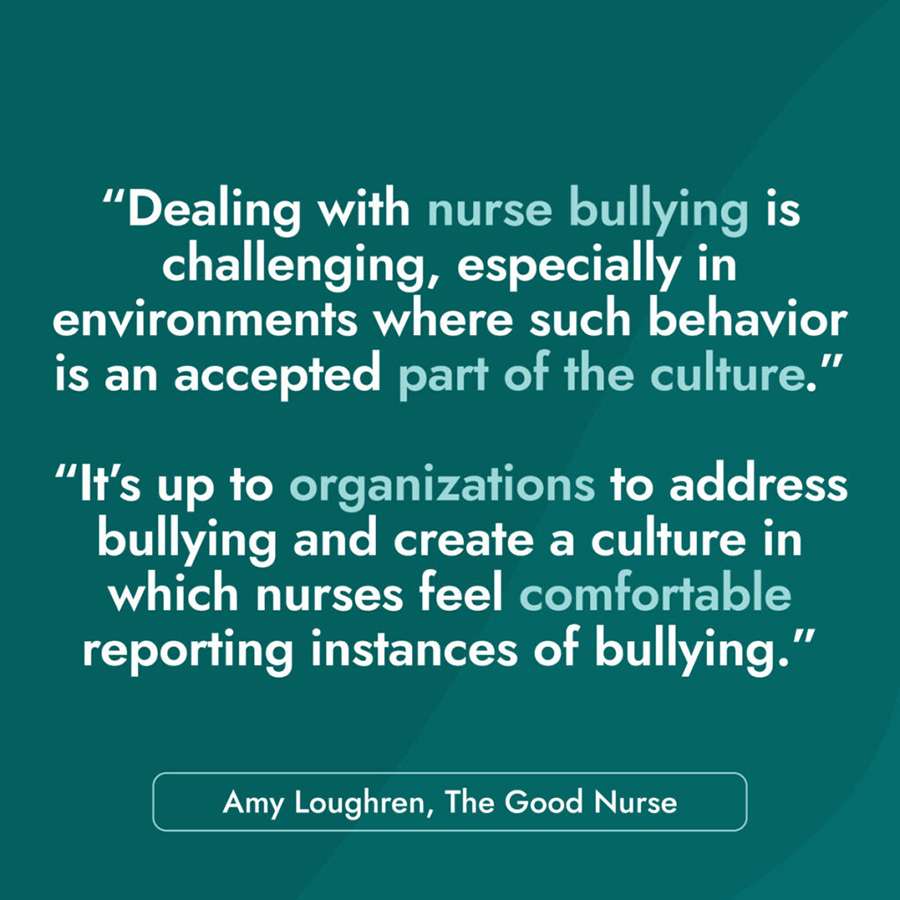
To truly impact bullying, there's only so much an individual nurse can do. Aside from reflecting on your own behavior and reporting it, choose to work for an organization that doesn't tolerate nurse bullying.
Attention to culture and nurse bullying

While supporting nurses who report abuse is important, nurse managers and other nursing leaders must take their efforts one step further to create a positive, healthy workplace culture that prevents bullying from occurring in the first place. This can be accomplished through:
- Developing a zero-tolerance policy: Zero-tolerance policies for workplace hostility outline clear expectations for employee behavior, as well as the consequences for those who fail to meet these expectations. This also empowers employees to speak up without fear of retribution.
- Leading by example: Managers and other leaders must commit to enforcing zero-tolerance policies and modeling positive workplace behavior. When leaders do this, they're signaling to all members of their team that lateral violence isn't tolerated.
- Assessing the root cause: Organizations can use behavioral and situational assessments to help determine the root cause of bullying. This information helps leaders create a more comprehensive framework for addressing bullying.
- Providing conflict management education: Effectively confronting bullying takes courage and tact. Through conflict resolution training, nurse leaders can empower their nurses with the skills to address and manage bullying and other forms of workplace violence.
- Creating awareness: It's important for all nurses (but especially new ones) to have a firm grasp on the signs of bullying. Training materials can help nurses better understand the differences between acceptable and unacceptable behavior and encourage them to report cases of abuse.
- Promoting team building: Nurses who feel that they are truly part of a team are less likely to engage in bullying. Emphasizing the importance of support networks and creating time and space for team building can help foster positive interpersonal behaviors.
“Preventing nurse bullying starts long before an incident is reported,” said Cara. “Leaders have to be intentional about creating psychologically safe environments where expectations are clear, accountability is consistent, and every team member feels respected.”
Protecting your emotional health
Healthcare is already emotionally demanding. When bullying is added to the mix, it can quickly lead to burnout, anxiety, and self-doubt. So protecting your emotional health is a must.
Pay attention to warning signs like dread before shifts, sleep problems, irritability, or loss of confidence. Set clear boundaries, document inappropriate behavior, and respond professionally when issues arise. Lean on trusted coworkers, friends, or a mental health professional for support, and consider using employee assistance programs if available.
Prioritize rest, movement, and activities that help you decompress after work. And if the environment continues to harm your well-being, remember: no job is worth sacrificing your psychological safety. You deserve a workplace rooted in respect and professionalism.
“Emotional resilience doesn’t mean tolerating toxic behavior,” emphasized Cara. “Nurses deserve work environments where respect is the standard, not the exception, and where seeking support is viewed as strength, not weakness.”


